What Is Trend Following? Trading Strategies Explained
In this article

Trend following is a systematic trading strategy designed to capture gains by entering positions in the direction of an established market trend. Rather than forecasting price reversals or picking bottoms, trend followers use technical indicators like moving averages and channel breakouts to stay invested until momentum reverses.
Quick Takeaways
- Trend following is a systematic trading strategy that aims to profit by trading in the direction of an established market trend rather than attempting to predict market tops or bottoms.
- Academic studies on systematic trend-following strategies run by CTAs (Commodity Trading Advisors) — professional managers who trade futures and CFD-style trends using rules-based systems — typically report win rates in the 30–40% range, relying on a favourable reward-to-risk ratio to remain profitable overall.
- Holding leveraged CFD positions over several weeks or months can lead to accumulating overnight swap fees, which may reduce overall returns.
This trading approach is a rules-based way to profit from sustained price moves. Instead of trying to call market tops or bottoms, you wait until a clear trend's already in motion before you open a position.
Many traders struggle with this strategy because they expect a high percentage of winning trades or attempt to anticipate market turning points. This guide explains how systematic trend strategies work in CFD trading, the main technical entry methods, how overnight financing costs affect longer-term positions, and how to manage risk during choppy market conditions.
What Is Trend Following in CFD Trading?
This strategy is a trading approach designed to capture the middle portion of a sustained market move. You'll want to look for established market structure — higher highs and higher lows in an uptrend, or lower highs and lower lows in a downtrend — before opening positions in the direction of the prevailing trend.
Unlike mean reversion strategies, which aim to buy undervalued assets or sell overextended markets, trend followers accept that they are unlikely to capture either the beginning or the end of a move. Instead, they focus on participating in the strongest part of the trend.
In CFD trading, this approach can be applied to both rising and falling markets. Because Contracts for Difference (CFDs) track the price of an underlying asset without transferring ownership, traders can take advantage of upward and downward trends across forex, stock indices and commodities.
How Trend Following Works: Core Entry Triggers
Most systematic trend-following strategies use technical indicators to reduce subjective decision-making and provide consistent entry signals.
Moving Average Crossovers
Moving averages smooth short-term price fluctuations to highlight the underlying market direction.
- A Simple Moving Average (SMA) calculates the average closing price over a specific period.
- An Exponential Moving Average (EMA) gives greater weight to recent price data, making it more responsive to current market conditions.
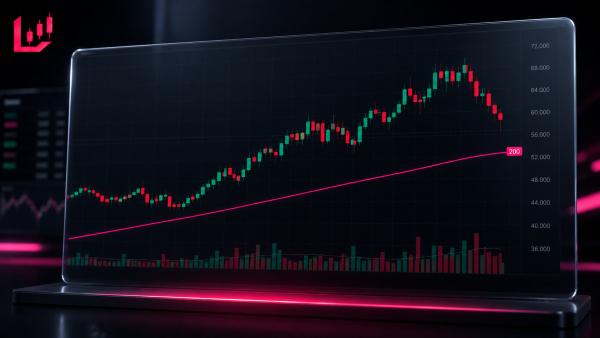
A common trend-following signal occurs when a shorter-term moving average crosses above a longer-term moving average. For example, when the 50-period SMA moves above the 200-period SMA, it suggests that medium-term momentum is strengthening relative to the longer-term trend, which may trigger a bullish entry.
Channel Breakouts
Breakout strategies enter the market when price moves beyond an established trading range.
Donchian Channels measure the highest high and lowest low over a defined period, such as 20 trading days. If price closes above the upper channel, the system opens a long position on the assumption that upward momentum may continue.
Confirmation Filters
Many traders use additional filters to reduce false breakout signals.
The Average Directional Index (ADX) measures trend strength on a scale from 0 to 100, regardless of direction. An ADX reading above 25 generally indicates that a meaningful trend is developing, helping traders avoid entering positions during weak or range-bound market conditions.
The True Cost of Running Leveraged Trends
Capturing trends that last several weeks or months requires holding CFD positions overnight. Although longer trends may offer greater profit potential, extended holding periods also introduce additional trading costs.
Cost Component | Impact on Short-Term Trades | Impact on Multi-Week Trends |
|---|---|---|
Spread | Primary cost per trade | Relatively small over long trends |
Slippage | Moderate during major news events | Greater risk on breakout entries and stop-loss execution |
Overnight Swap | Minimal for intraday trading | Significant due to daily financing charges |
Overnight swap fees, also known as financing charges or overnight interest adjustments, apply whenever a leveraged CFD position remains open after the market closes. These charges reflect the cost of borrowing funds to maintain leveraged exposure.
Over time, daily financing costs can reduce a meaningful portion of trading profits, particularly during long-running trends. In addition, entering breakout trades during periods of high volatility increases the likelihood of slippage, where orders are filled at a less favourable price than expected because of rapidly changing market conditions.
Key Trend-Following Strategies for CFD Traders
This strategy uses predefined technical rules to manage entries, exits and position sizing.
Strategy | Primary Indicator | Best Market Conditions |
|---|---|---|
Dynamic Pullback | 20- and 50-period EMA | Established trends |
Donchian Breakout | 20-day High/Low Channels | Early trend expansion |
Volatility-Adjusted Position Sizing | Average True Range (ATR) | High-volatility trends |
Dynamic Pullback Strategy
Rather than buying at breakout highs, this strategy waits for temporary pullbacks within an established trend.
Traders monitor dynamic support created by moving averages, such as the 20-period or 50-period EMA. When price pulls back to the moving average and shows signs of resuming the trend, a position is opened in the direction of the prevailing market. The stop-loss sits below the most recent swing low.
Donchian Channel Breakout Strategy
Donchian breakout systems aim to capture emerging trends as early as possible.
A typical mechanical system opens a long position when price reaches a new 20-day high. The trade is closed, or potentially reversed, if price subsequently falls to a new 10-day low. This rules-based approach keeps traders invested while the trend remains intact instead of attempting to predict market reversals.
Volatility-Adjusted Position Sizing
Market volatility changes over time, meaning position sizes should adjust accordingly.
The Average True Range (ATR) measures average price movement over a specified period. As volatility increases, ATR rises and stop-loss distances widen. To maintain consistent monetary risk across trades, position sizes are reduced as stop distances increase.
Position Size = Risk Capital ÷ (Stop Distance in Pips × Pip Value)

Risk Management and Common Pitfalls
The primary objective of trend management is preserving capital during periods of consolidation and increased market uncertainty.
Whipsaw Losses in Ranging Markets
One of the main weaknesses of trend-following strategies is their performance in sideways markets.
When prices move within a narrow range, moving averages flatten and breakout signals often fail. This creates whipsaw losses, where long positions are stopped out near the top of the range and short positions are stopped out near the bottom.
Repeated stop-losses, spread costs and slippage can result in extended periods of drawdown before a sustained trend eventually develops.
Managing Low Win Rates
Academic research on systematic trend-following (CTA) strategies, such as studies published via SSRN, indicates that many mechanical systems achieve win rates of only 30% to 40%.
Long-term profitability depends on maintaining a favourable reward-to-risk ratio, where profits from successful trades outweigh the cumulative losses from unsuccessful ones.
Many traders struggle psychologically with consecutive losing trades and may close profitable positions too early or abandon their strategy during temporary drawdowns.
Trailing Stop Discipline
Rather than using fixed profit targets, many trend followers use trailing stop-losses to protect gains while allowing winning trades to continue.
An ATR-based trailing stop, for example three times the current ATR below price, gradually moves higher as the trend develops. This helps keep positions open during normal pullbacks while protecting profits if the overall trend eventually reverses.
Conclusion
This strategy is a rules-based trading approach designed to capture sustained price movements across a range of financial markets. Success depends on accepting relatively low win rates, adjusting position sizes to changing market volatility and following a disciplined trading plan through inevitable periods of drawdown.
When trading leveraged CFDs, it is also important to consider the ongoing cost of overnight financing, as well as potential slippage and spread costs, particularly for positions held over extended periods. To learn how these considerations fit within different technical approaches, see our guide to CFD trading strategies.
FAQ
What is the best indicator for trend following in CFD trading?
Moving averages and Donchian channels are among the most effective technical indicators for trend following. Simple moving averages (SMA) help identify the underlying trend direction, while Donchian channels signal high-volatility range breakouts. Combining these with the Average Directional Index (ADX) confirms trend strength before executing trades.
What is the typical win rate for a trend-following strategy?
Academic research on mechanical trend-following (CTA) strategies — for example, studies indexed on SSRN's managed-futures research archive — suggests these systems generally operate with a win rate between 30% and 40%. Because trend traders experience frequent whipsaw losses in ranging or flat markets, long-term profitability depends on maintaining a large reward-to-risk ratio that allows winning trades to outweigh small losses. Any win-rate or performance figures cited are historical or academic averages and do not guarantee future results.
How do overnight swap fees affect trend followers?
Overnight swap fees represent a major ongoing transaction cost when running multi-week or multi-month CFD trends. These daily financing charges compound over time, meaning traders must ensure that structural trend profits are large enough to offset accumulated swap charges alongside standard execution spreads.
What is the difference between momentum trading and trend following?
While both styles trade aligned with price movement, momentum trading often focuses on short-term acceleration and sharp volume spikes. Trend following focuses on capturing sustained multi-session price structure by entering established trends and managing open positions with dynamic trailing stops.
How do you set a stop-loss when trend following?
Trend followers frequently use Average True Range (ATR) dynamic trailing stops or major technical swing levels rather than fixed price targets. A trailing stop moves in the direction of the trend as price advances, protecting unrealised profits while giving the position room to breathe during minor pullbacks.