What Is cTrader? A Guide to the ECN Trading Platform
In this article
- The Core Architecture: How cTrader Works
- Spread vs Commission: Understanding the Cost of Trading with cTrader
- Key Features for Manual and Algorithmic Traders
- cTrader vs MT4 and MT5: Key Operational Differences
- Execution Realities: Slippage, Latency and Market Risk
- Conclusion
- Frequently Asked Questions
- Browse All Education

cTrader is an institutional-grade multi-asset trading platform developed by Spotware Systems that features direct market access (DMA) via Electronic Communication Network (ECN) and Straight-Through Processing (STP) execution. It connects retail traders directly to global tier-one liquidity providers, eliminating broker dealing-desk intervention. The platform utilizes raw market spreads paired with flat, transparent commission charges rather than traditional spread markups.
Understanding what is cTrader starts with recognising it as a multi-asset trading platform developed by Spotware Systems, designed to support direct market access through Electronic Communication Network (ECN) and Straight-Through Processing (STP) execution.
cTrader is a multi-asset trading platform developed by Spotware Systems. It is designed to support direct market access through Electronic Communication Network (ECN) and Straight-Through Processing (STP) execution.
Rather than relying on a traditional dealing-desk model, cTrader is commonly used in non-dealing desk trading environments. Orders may be routed to external liquidity providers, depending on the broker’s execution model and liquidity arrangements.
For retail Contract for Difference (CFD) traders, cTrader can provide a different trading experience from platforms that use fixed or marked-up pricing. Access to external liquidity may affect spreads, commissions and order execution.
This guide explains how cTrader works, how its pricing structure may influence trading costs, and the execution risks traders should consider when using the platform.
Before diving deeper into what is cTrader and how it works, here are the key points to know:
- cTrader is designed to support ECN and STP execution through a non-dealing desk framework.
- Depending on the broker, traders may receive raw or narrow spreads alongside a separate commission charge.
- The platform includes Level II market depth, algorithmic trading through C#, and integrated copy-trading tools.
- Direct market access may improve order-routing efficiency, but it does not remove risks such as slippage, price gaps or losses during volatile market conditions.
The Core Architecture: How cTrader Works
Part of understanding what is cTrader lies in its core architecture: it is designed to provide access to institutional financial markets through ECN and STP execution. Rather than relying on a traditional dealing-desk model, the platform supports automated order routing to external liquidity providers, depending on a broker's execution model and liquidity arrangements.
Retail Trader Order → cTrader Core Engine → FIX API Routing → Liquidity Providers
The ECN/STP Routing Process
When you place a buy or sell order in cTrader, the platform processes the request using Straight-Through Processing (STP). Depending on the broker's infrastructure, orders may be routed via the Financial Information eXchange (FIX) protocol to external liquidity providers within an Electronic Communication Network (ECN).
These liquidity providers stream live bid and ask prices into the market. The platform is designed to execute orders at the best available price at the time of execution, subject to market conditions, available liquidity and broker execution policies. This approach can help reduce potential conflicts of interest associated with dealing-desk execution models.
Level II Market Depth
One of cTrader's standout features is its built-in Level II Market Depth. Unlike many retail trading platforms that display only the best bid and ask prices, cTrader shows multiple levels of available liquidity across different price points.
This additional market depth allows traders to see how much volume is available at each price level before placing an order. For larger trades, this information can help explain how an order may be filled.
If the size of your order exceeds the available liquidity at the best available price, it may be executed across multiple price levels. This is known as a partial fill and can result in a different average execution price.
Spread vs Commission: Understanding the Cost of Trading with cTrader
When evaluating what is a trading platform, it is important to understand how a platform's pricing model can affect your overall trading costs.
Many brokers offering cTrader accounts use a raw spread plus commission pricing model. Instead of widening the spread to include their fee, they may offer market-based spreads and charge a separate commission. However, pricing structures vary between brokers.
The Raw Pricing Model
Some brokers using traditional retail platforms generate revenue by adding a markup to the market spread. For example, if the underlying market spread is 0.2 pips, a broker may quote a spread of 1.2 pips, with the additional 1.0 pip representing its charge.
Many cTrader brokers instead offer access to raw or near-raw spreads and apply a transparent commission for each trade. During periods of high liquidity, spreads on major Forex currency pairs offered by some cTrader brokers may narrow considerably compared with standard accounts, although the exact figures vary by broker and can widen significantly during volatile market conditions.
Example Trading Costs
The example below compares the estimated cost of a round-turn trade of one standard lot (100,000 currency units), assuming one pip is worth $10.
Standard spread account
- Spread: 1.2 pips
- Commission: None
Estimated trading cost
1.2 pips × $10 = $12.00
cTrader ECN account
- Raw spread: 0.2 pips
- Commission: $3.50 per side ($7.00 round turn)
Estimated trading cost
(0.2 pips × $10) + $7.00 = $2.00 + $7.00 = $9.00
In this illustrative example, the total transaction cost is $9.00 compared with $12.00 for the standard spread account.
For traders who open and close positions frequently, lower spreads can reduce overall trading costs. However, trading expenses are only one part of the equation. If you hold positions overnight, you should also consider overnight fees (swap charges), which are determined by factors such as interest rate differentials and your broker's pricing policy. These charges are separate from the trading platform itself.
Key Features for Manual and Algorithmic Traders
cTrader combines advanced charting tools with support for automated trading, making it suitable for both discretionary traders and those who develop algorithmic strategies.
Advanced Charting and Detachable Workspaces
For traders who rely on technical analysis, cTrader provides a flexible charting environment that can be customised to suit different trading styles. Charts can be detached into separate windows, making it easier to build multi-monitor workspaces with independent charts, order panels and market information.
The platform also supports chart trading, allowing traders to place and manage orders directly from the chart. Stop-loss and take-profit levels can be adjusted visually by dragging them to new price levels, providing a quicker way to manage open positions.
cTrader Automate (cBots)
For algorithmic trading, cTrader includes cTrader Automate, a development environment based on C# and the .NET framework.
Traders can build automated trading strategies, known as cBots, as well as custom technical indicators using a widely adopted programming language. The platform also includes tools for historical backtesting and strategy optimisation, helping developers evaluate how a strategy would have performed under past market conditions.
For traders moving from platforms that use different programming languages, migrating existing strategies may require significant redevelopment.
cTrader Copy
cTrader Copy is the platform's integrated copy trading service. Rather than relying on third-party plugins, it allows users to browse strategy providers and choose whether to copy their trades.
The platform automatically tracks performance, calculates any applicable fees and manages trade allocation based on the selected strategy settings. As with any form of copy trading, past performance does not guarantee future results, and copied strategies can still generate losses.
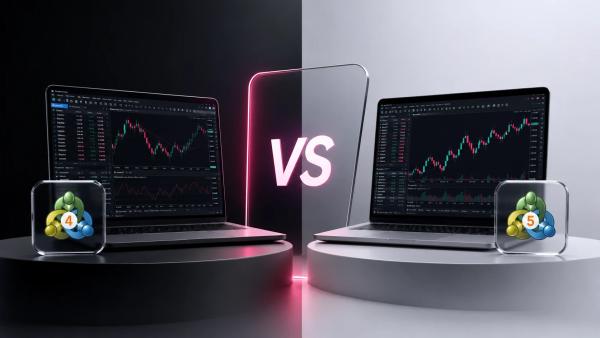
cTrader vs MT4 and MT5: Key Operational Differences
Another way to answer what is cTrader compared with alternatives is to look at how it differs from the MetaTrader platforms, particularly in how user accounts and platform settings are managed.
Cloud-Based vs Local Platform Architecture
MetaTrader 4 (MT4) and MetaTrader 5 (MT5) typically store account settings, indicators and workspaces locally or within a specific broker's server environment. As a result, transferring customised settings between devices or brokers may require additional configuration.
cTrader uses a cloud-based account system centred around a cTrader ID (cID). After signing in, supported settings such as workspaces, watchlists and preferences can be synchronised across compatible desktop, web and mobile versions of the platform.
The exact level of synchronisation may vary depending on the feature being used and the broker's implementation.
Structured Comparison Table
Feature Dimension | cTrader Platform | MetaTrader 4 (MT4) | MetaTrader 5 (MT5) |
|---|---|---|---|
Core Architecture | Cloud-Based ECN/STP Platform | Traditional Client-Server Platform | Multi-Asset Client-Server Platform |
Core Programming Language | C# (.NET Framework) | MQL4 | MQL5 |
Market Depth Clarity | Native Level II Market Depth | Limited Market Depth | Built-in Market Depth |
User Profile Syncing | Centralised cTrader ID (Cloud) | Localised per Broker Account | Localised per Broker Account |
Order Execution Framework | Ticket-Based Async Processing | Single-Threaded Processing | Asynchronous Multi-Threaded |
Execution Realities: Slippage, Latency and Market Risk
It is also worth noting that cTrader's advanced features, such as Level II Market Depth and algorithmic cBots, require a certain level of technical understanding to use effectively, and traders unfamiliar with these tools may find the learning curve steep compared with simpler retail platforms.
A common misconception is that direct market access guarantees perfect trade execution. While platforms such as cTrader can improve transparency and provide access to external liquidity, they cannot remove the risks associated with fast-moving financial markets.
Order execution is still affected by factors such as network latency, market liquidity and price volatility. During major economic announcements, unexpected geopolitical events or after markets reopen following the weekend, available liquidity can decline rapidly, causing prices to move significantly within a short period.
Because cTrader executes orders using available market liquidity, orders placed during volatile conditions may experience slippage. This means your trade is executed at the next available market price rather than the price displayed when you placed the order. Slippage can be either positive or negative, depending on market conditions at the time of execution.
Similarly, features such as stop-loss orders and automated cBots cannot guarantee protection from every market event. During periods of extreme volatility or price gaps, stop-loss orders may be filled at a less favourable price than expected.
While ECN infrastructure changes how orders are routed and executed, it does not remove the risks associated with trading leveraged products such as Contracts for Difference (CFDs).
For traders considering ECN/STP execution, the Financial Conduct Authority (FCA) provides further guidance on CFD trading risks at fca.org.uk.
Conclusion
cTrader is a feature-rich multi-asset trading platform that answers the question of what is cTrader for many traders: designed to support ECN and STP execution, it combines advanced charting tools, Level II Market Depth, algorithmic trading through C#, and integrated copy trading within a modern trading environment.
For many traders, its raw spread and commission pricing model may offer greater pricing transparency than traditional spread-only accounts. However, the overall cost of trading will always depend on your broker's pricing structure, execution quality and the way you trade.
Choosing a trading platform is an important decision, but it is only one part of successful trading. Long-term results depend on effective risk management, understanding trading costs and using appropriate strategies for your objectives and level of experience.
If you want to compare how trading costs vary between providers, our CFD broker reviews examine spreads, commissions, execution quality and other key factors to help you make an informed choice.
FAQ
Is cTrader better than MT4 or MT5?
cTrader is not inherently better than MetaTrader 4 or 5, but it serves a fundamentally different infrastructure purpose. While MetaTrader is highly localized to specific broker configurations, cTrader operates on a centralized cloud architecture via a single cTrader ID. cTrader is natively optimized for ECN/STP raw pricing setups and uses modern C# for automation, whereas MT4/MT5 use proprietary MQL development frameworks.
Is cTrader a broker or a software platform?
cTrader is an independent software platform developed by Spotware Systems; it is not a broker. It functions purely as a technology interface and routing engine. To execute real-world trades using cTrader, you must open a live account with a financial broker that licenses the software infrastructure and provides access to underlying liquidity pools.
What coding language does cTrader use for automated trading?
cTrader uses C# and the Microsoft .NET framework for its automation environment, known as cTrader Automate. This allows retail algorithmic traders to write custom technical indicators and automated trading robots (cBots) in a standard, universally recognized programming language, eliminating the need to learn specialized proprietary codebases like MQL.
Can you trade retail CFDs directly on cTrader without a broker account?
No, you cannot trade live retail CFDs on cTrader without a registered account from a supporting broker. The software requires a backend broker integration to supply market liquidity, process real capital balances, and route orders. However, you can launch a free demo version using historical or simulated data feeds to test the interface without funding an active trading account.
Does cTrader eliminate execution slippage and market gaps?
No, cTrader does not eliminate execution slippage, latency, or market gaps. Because the platform routes your orders directly to matching pools within a live global Electronic Communication Network (ECN), your trades remain fully exposed to real-world market liquidity. During high volatility or severe economic releases, orders can fill at less favorable prices on the liquidity ladder.