What Is Position Trading? A Long-Term Trader's Guide
In this article

Position trading is a long-term strategy where traders hold positions for weeks, months, or years to capture major macroeconomic market trends. Unlike short-term trading styles, it relies heavily on fundamental analysis and multi-month chart horizons. When executed via CFDs, this approach requires careful management of leverage and compounding overnight financing charges.
What is position trading? It is a long-term trading approach in which you hold a position for weeks, months or even years. Decisions are usually based on broad macroeconomic trends and fundamental changes. Unlike short-term traders who respond to intraday price movements, position traders focus on the wider market picture and aim to capture the main part of a long-term trend.
However, the mechanics are very different when you use contracts for difference (CFDs). CFDs are leveraged products, so keeping a position open for several months requires a clear understanding of margin requirements. You must also account for the daily costs of holding the position, which traditional buy-and-hold investors do not usually face.
Quick Takeaways
- Position trading focuses on macroeconomic trends that may develop over several months, rather than short-term technical volatility.
- Traditional investors buy assets outright, while CFD position trading involves daily financing costs that can accumulate over time.
- This approach requires a substantial capital buffer to withstand normal market retracements without triggering a margin call.
- Managing behavioural biases, such as loss aversion, is important when deciding whether a price movement is a temporary pullback or a structural market reversal.
How Position Trading Works
Position trading is the longest-term trading style commonly used in the markets. It sits at the opposite end of the spectrum from day trading and scalping. A day trader may open and close a position within minutes to take advantage of small pricing inefficiencies.
A position trader, by contrast, identifies a structural change in an economy or underlying asset and aims to remain positioned for the longer-term move. This broader approach forms the basis of many advanced CFD trading strategies.
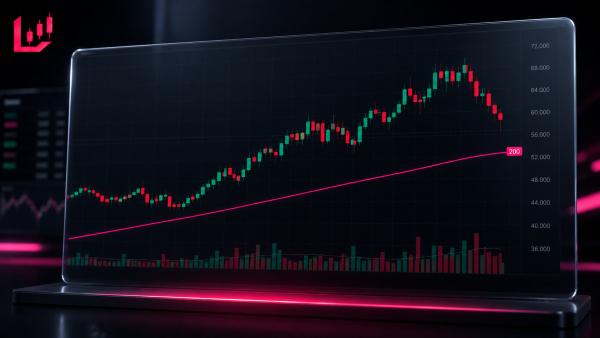
To trade in this way, you need to look beyond daily market noise. Rather than focusing heavily on hourly candlestick movements, you analyse weekly and monthly charts to identify major support and resistance levels, as well as long-term moving averages.
Fundamental analysis also plays a central role. Position traders assess structural market drivers, including central bank interest rate decisions such as those set by the Bank of England or the Federal Reserve, gross domestic product (GDP) growth, geopolitical developments, and long-term supply-and-demand imbalances.
A position trader accepts that prices may fluctuate significantly from one day to the next. The underlying assumption is that the fundamental factors supporting the trade may eventually move the asset towards the trader’s long-term target.
Position Trading vs Swing Trading: The Key Differences
Long-term trading strategies are often confused with one another, but comparing position trading with swing trading helps highlight the key differences. If you explore what is swing trading, you will find that swing traders aim to capture individual price swings within a broader trend, typically holding positions for a few days to several weeks. Position traders, by contrast, are willing to hold through those short-term fluctuations in pursuit of the wider trend over several months or longer.
This difference in time horizon also shapes how each approach is managed. Swing traders tend to trade more frequently, looking for technical reversal points and chart patterns on daily timeframes. Position traders trade far less often, focusing instead on high-conviction opportunities that may take months to develop.
Attribute | Swing Trading | Position Trading |
|---|---|---|
Typical Holding Period | Several days to a few weeks | Several weeks to months, or even years |
Primary Analysis | Primarily technical analysis | A combination of fundamental and technical analysis |
Chart Timeframes | 4-hour and daily charts | Daily, weekly and monthly charts |
Main Cost Exposure | Spreads and short-term overnight financing charges | Accumulating overnight financing charges over time |
The CFD Reality: Why Position Trading Changes the Cost Equation
When you buy a physical asset outright through a traditional cash brokerage account, holding it over time generally does not involve ongoing financing costs. If you own an unleveraged share for six months, you do not pay your broker a daily fee simply to keep it in your portfolio.
The cost structure is very different with CFDs. Because CFDs are leveraged products, your broker is effectively providing the capital needed to maintain your market exposure. To keep that position open beyond the daily market close, you are charged an overnight financing fee, often referred to as a swap charge.
As a result, when assessing the true cost of a CFD position, the spread paid when opening the trade becomes relatively less significant. Instead, the cumulative overnight swap charges can become the largest ongoing trading cost.
Consider this example. Suppose you open a long CFD position on a major global stock index with a notional value of £10,000. If your broker applies an annual financing rate based on a benchmark rate plus a standard retail premium—assume a combined rate of 6.5% per year —the overnight financing cost would be around £1.78 per day.
Over one week, a total cost of £12.46 may seem insignificant. However, if your macroeconomic outlook requires you to hold the position for six months (180 days), those daily financing charges add up to approximately £320. If the value of the index rises by 5% during that period, generating a £500 gain from the price movement alone, more than 60% of that gross profit would be offset by overnight financing costs before accounting for other charges, such as account fees or currency conversion costs. If the trade finishes at break-even or ends in a loss, those financing costs still apply in full.
Strategic Risks and Behavioural Pitfalls
Holding CFD positions over several months introduces structural risks that shorter-term traders may rarely face. One of the most significant is the combination of leverage and margin management, because your position remains open through major economic announcements, corporate earnings seasons and unexpected geopolitical developments, meaning periods of sharp market retracement are inevitable.
If you use the maximum available leverage, a normal market correction of 5% to 10% against your position may quickly erode your account equity and trigger a margin call before your longer-term investment thesis has time to develop. Position trading with CFDs therefore requires a substantial capital buffer and a disciplined approach to using leverage.
Beyond these practical considerations, position trading can also create significant psychological challenges, particularly through the behavioural bias known as loss aversion. In practice, many traders find it difficult to distinguish between a normal market pullback and a genuine structural trend reversal. When a long-held position starts moving against them, it is easy to become anchored to the original investment thesis and convince themselves that it is only a temporary decline, even when the underlying macroeconomic environment has fundamentally changed.
Finally, it is important to consider opportunity cost. Capital committed to maintaining a slow-moving leveraged position for several months cannot be used elsewhere. This may prevent traders from taking advantage of shorter-term opportunities that emerge as market conditions change.
Conclusion
Position trading is a long-term trading approach driven by macroeconomic trends and fundamental analysis. It is well suited to traders who prefer focusing on long-term market cycles rather than responding to short-term price volatility. While it offers a more hands-off approach to trade management, using CFDs changes the cost structure significantly. Over time, overnight financing charges can have a much greater impact on overall returns than the initial spread.
To use this strategy effectively, traders need a disciplined approach to capital management, conservative use of leverage, and the ability to recognise when a long-term market trend has genuinely come to an end.
FAQ
What is the difference between swing trading and position trading?
Swing trading focuses on capturing shorter-term price movements over days or weeks, relying heavily on technical analysis[cite: 1]. Position trading targets the broader, multi-month primary trend by blending fundamental and technical analysis, holding positions through short-term market corrections.
What indicators do position traders use?
Position traders primarily use structural indicators on daily, weekly, and monthly charts[cite: 1]. Common technical tools include the 200-day moving average, long-term support and resistance lines, and structural trend lines, which are paired with fundamental data like interest rates and GDP.
How long do position traders hold their positions?
Position traders hold their trades for weeks, months, or even years[cite: 1]. The exact duration depends entirely on how long the underlying macroeconomic drivers or primary market trends take to fully mature.
Can you use leverage for position trading?
Yes, but using leverage via instruments like CFDs introduces significant structural risk. Leveraged long-term positions require massive capital cushions to withstand standard market retracements and avoid margin calls, alongside keeping track of compounding daily overnight holding fees.
What are the main risks of long-term position trading?
The primary risks include accumulating overnight financing costs that can eat away potential profits, capital lockup (opportunity cost), and behavioral biases like loss aversion, where a trader ignores a genuine fundamental regime shift by assuming it is a temporary pullback.