What Is Scalping in Trading? Micro-Moves Explained
In this article

Scalping is a hyper-short-term trading execution style focused on capturing minor, incremental price changes multiple times throughout a single session. Unlike long-term strategies, positions are opened and closed within seconds or minutes to build a cumulative return from continuous micro-movements.
Understanding what is scalping in trading involves starts with recognising that the timeframe often determines the strategy. Position traders may hold trades for months, while day traders usually focus on movements over several hours. Scalpers, by contrast, operate over minutes, seconds and individual price ticks.
Scalping is an extremely short-term trading style that aims to capture small, incremental price movements several times during a single trading session. Instead of looking for large market trends, a scalper seeks to make a high number of small gains that may add up to a more meaningful overall result.
In practice, scalping requires very fast execution, sustained concentration and strict risk management.
Quick Takeaways
- Scalping may involve opening and closing dozens or even hundreds of positions in one day, with trades lasting only seconds or minutes.
- The strategy limits the amount of time a position remains open, which may reduce exposure to sudden and significant adverse market movements.
- Trading costs, particularly the bid-ask spread and commission, can quickly remove the small potential gain from each trade if they are not carefully managed.
- Effective scalping requires very fast execution, highly liquid markets and strong emotional discipline.
How Scalping Works
The basic principle behind scalping is straightforward: small price movements occur more often and may be easier to capture than large ones. A share or currency pair might take several days to move by 5%, but it could fluctuate by 0.05% many times within an hour.
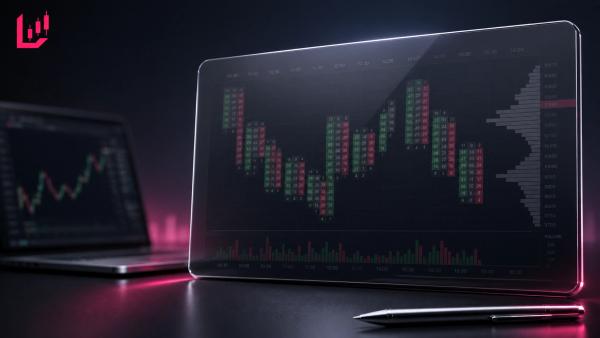
Scalpers aim to take advantage of these small price movements. They rely mainly on technical analysis and often use very short-term charts, such as one-minute or tick charts. Some also monitor real-time order flow data, including Level 2 market depth.
To understand how scalping differs from traditional day trading and other trading styles, it helps to compare their main characteristics.
Traditional Day Trading
Traditional day trading involves holding positions for several hours during a single trading session. The aim is to capture wider intraday price movements that are large enough to cover trading costs.
Scalp Trading
Scalp trading is a very short-term approach that involves entering and exiting the market within seconds or minutes. Scalpers target small price movements and aim to make modest gains from repeated short-term market fluctuations.
Swing Trading
Swing traders usually analyse daily or four-hour charts and may hold positions for several days or weeks. Their aim is to capture broader market swings that develop over time.
Scalpers, by contrast, do not normally leave positions open overnight. They close their exposure before the market shuts to avoid the risk of overnight price gaps.
Because the potential gain from each trade is small, scalpers may use larger position sizes or higher leverage to increase the monetary value of each price movement. However, this also increases potential losses and makes strict risk management essential.
Why Scalping Matters to a CFD Trader
For traders using Contracts for Difference (CFDs), scalping works differently from traditional share trading. CFDs allow traders to speculate on price movements using leverage, meaning only a proportion of the total trade value needs to be deposited as margin. According to the Financial Conduct Authority, CFDs are complex, leveraged products that carry a high risk of losing money rapidly for retail clients.
In practice, many traders find that while leverage can significantly amplify the gains from a 2-pip micro-movement, it accelerates losses at the exact same rate if the trade ticks against you — a dynamic that becomes especially clear the first time a fast-moving session turns a promising scalp into an unexpectedly large drawdown within seconds.
When using a scalping strategy with CFDs, the spread becomes one of the most important factors affecting profitability. Every trade begins at a loss equal to the width of the bid-ask spread. For example, if your target is a 3-pip gain but the spread is 1.5 pips, the market must move 4.5 pips in your favour before you reach your intended net profit.
Execution speed is equally important. Because scalpers aim to enter and exit trades within very short timeframes, even small delays can have a significant impact. During fast-moving or volatile market conditions, market orders may experience slippage, which is the difference between the requested price and the price at which the order is executed. Just one pip of negative slippage may be enough to eliminate the expected profit from a scalp trade.
Mechanics of a Scalping Strategy
An effective scalping strategy depends on efficient execution. Scalping in forex is particularly common, as scalpers generally focus on highly liquid markets, such as major currency pairs including EUR/USD and GBP/USD, or major stock indices. High liquidity typically results in tighter spreads and lower levels of slippage.
Typical Indicators Used
Moving Average Ribbons
Scalpers often monitor short-term Exponential Moving Averages (EMAs), such as the 5-period and 20-period EMAs on a one-minute chart, to identify changes in short-term market momentum.
Stochastic Oscillator
This momentum indicator helps identify short-lived overbought and oversold conditions within a narrow trading range, which may provide opportunities for counter-trend scalp trades.
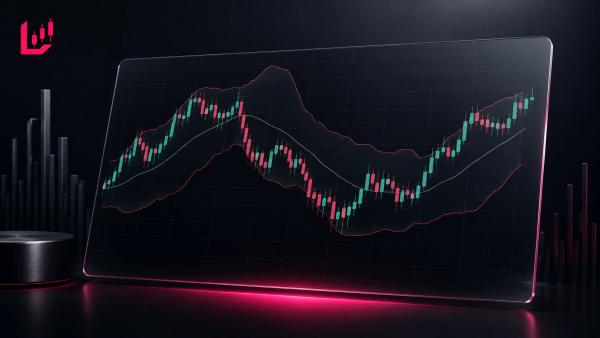
Bollinger Bands
Bollinger Bands are used to measure current market volatility. Some scalpers look for prices to touch or move beyond the outer band before quickly reverting towards the average price.
Tactical and Structural Distinctions
Comparing scalping with traditional day trading helps illustrate how the two approaches differ in practice. While day traders may keep positions open for several minutes or even hours, scalpers typically measure their exposure in seconds or minutes. As a result, trading frequency differs considerably. As a general pattern observed in trading practice, a day trader typically places only a handful of trades during a session, whereas a dedicated scalper may execute considerably more, with frequency varying widely depending on strategy, market conditions and individual risk tolerance.
This higher trading frequency also changes the analytical approach. Day traders often base their decisions on five-minute to one-hour charts, while scalpers focus mainly on tick charts and one-minute charts.
Risk management also differs. Day trading strategies often aim for a risk-to-reward ratio that allows potential gains to comfortably outweigh normal trading costs, while scalpers frequently operate with a much tighter ratio between the size of a typical gain and a typical loss. This is why spreads and other execution costs can determine whether the strategy remains viable over time.
Risks, Drawbacks, and Psychological Challenges
One of the main attractions of scalping is that it reduces market exposure. Because positions are usually held for only a few minutes, there is less chance of being caught by an unexpected market-moving event. However, this advantage comes with significant operational and psychological risks.
The Cumulative Cost of Trading
Scalping involves a high number of trades, meaning transaction costs can build up quickly. If you place 100 trades in a day with a spread of one pip on each trade, you effectively pay 100 pips in trading costs regardless of your overall win rate. A strategy that appears profitable in theory may become unprofitable once real trading costs are taken into account.
The Risk of Disproportionate Losses
Many scalping strategies use a tight risk-to-reward ratio, sometimes targeting a two-pip gain with a two-pip stop-loss. A single execution mistake, or holding onto a losing position for too long during a volatile market move, can produce a loss that wipes out the gains from dozens of successful scalp trades within seconds.
Psychological Fatigue and Overtrading
Scalping demands continuous concentration throughout the trading session. Maintaining this level of focus can be mentally exhausting and may increase the likelihood of behavioural biases.
Following a series of small losses, some traders fall into the trap of revenge trading. This often involves abandoning a disciplined trading plan in an attempt to recover losses quickly, which can lead to substantial drawdowns.
Conclusion
Understanding what is scalping in trading really means requires looking beyond the appeal of rapid trade execution and recognising how the strategy works in practice. Scalping is a highly disciplined trading approach that aims to generate small gains from frequent short-term price movements. While it reduces prolonged market exposure, it also increases exposure to operational challenges, where execution speed, trading costs and emotional discipline play a critical role.
For retail traders, developing a strong understanding of execution mechanics through broader cfd trading strategies is essential before attempting high-frequency trading approaches.
FAQ
What is the primary difference between scalping and day trading?
Traditional day trading focuses on capturing wider intra-day swings, with positions typically held for minutes to hours and a lower daily volume. Scalping operates on tick or 1-minute frameworks, requiring traders to execute dozens or hundreds of rapid transactions a day, holding each position for only seconds or minutes.
Why are transaction costs so critical in a scalping strategy?
Because scalpers target very small price increments (often just a few pips), transaction costs like the bid-ask spread and commissions consume a massive percentage of each trade's gross profit. High trade volume compounds these friction costs rapidly, meaning an unmanaged spread can easily turn a winning strategy negative.
What is slippage in scalping?
Slippage is the structural difference between the exact price a trader requests via a market order and the actual price at which the execution occurs. In rapid, high-frequency setups, even a single pip of negative slippage due to network latency or market volatility can entirely eliminate the thin profit margin of a scalp.
What assets are most suitable for scalping?
Scalpers require highly liquid financial assets with maximum volume, such as major currency pairs or mega-cap stock indices. High liquidity provides the tightest possible bid-ask spreads and minimizes execution slippage, both of which are critical structural requirements for high-frequency trading frameworks.
What are the main psychological risks of scalping?
The rapid pace and constant screen time required by scalping create extreme psychological fatigue. This frequently triggers cognitive overtrading and revenge trading—where a trader abandons strict technical boundaries to aggressively recover minor losses, leading to severe structural drawdowns.