What Is a Guaranteed Stop? How GSLOs Protect From Slippage
In this article

A guaranteed stop, or guaranteed stop-loss order (GSLO), is an order execution type that ensures a position is closed at an exact predetermined price regardless of market gapping or volatility. Unlike standard stop-loss orders, a guaranteed stop eliminates execution slippage, with the broker assuming the gap risk in exchange for a non-refundable fee or spread mark-up.
So, what is a guaranteed stop in plain terms? Officially known as a guaranteed stop-loss order (GSLO), it's a trading instruction that ensures a broker closes your position at a specified price, regardless of market volatility or price gaps.
A guaranteed stop — officially known as a guaranteed stop-loss order (GSLO) — is a trading instruction that ensures a broker closes your position at a specified price, regardless of market volatility or price gaps.
In fast-moving financial markets, asset prices can jump over certain price levels without trading at them. Standard stop-loss orders may experience slippage in these conditions, resulting in execution at a less favourable price than intended. A guaranteed stop removes this execution risk by limiting the maximum potential loss on the position to the chosen stop level.
However, brokers charge a non-refundable premium or apply a wider spread mark-up for providing this protection. Understanding how guaranteed stops work, what they cost and when they may be appropriate is an important part of disciplined risk management.
Quick Takeaways
- A guaranteed stop ensures that a position closes at the specified stop price, removing the risk of slippage caused by market gaps.
- Brokers charge a non-refundable premium or spread mark-up for taking on the execution risk associated with guaranteed stop-loss orders.
- A guaranteed stop limits the maximum loss on an individual trade but does not make trading risk-free or guarantee profits.
- Guaranteed stops can be particularly useful around scheduled economic announcements, central bank decisions or when holding positions over the weekend.
What Is a Guaranteed Stop-Loss Order?
A guaranteed stop-loss order is an order execution mechanism offered by Contract for Difference (CFD) brokers to manage the risk of market gaps. When you open a leveraged position, the guaranteed stop meaning centres on certainty of execution. Your broker commits to closing the position at your stop level, even if the market price jumps straight past it.
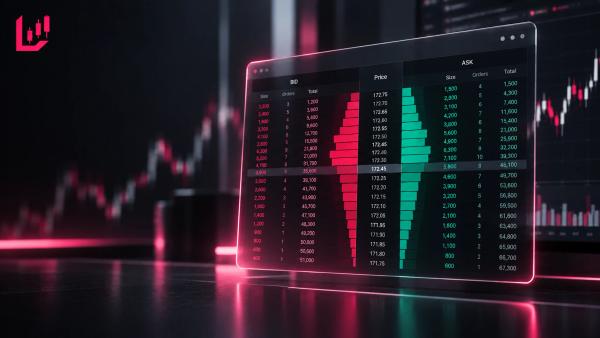
Understanding what does guaranteed stop mean in practical trading requires looking at how market liquidity works. In normal conditions, there's a steady stream of bid prices (what buyers will pay) and ask prices (what sellers will accept), so your order can usually be filled close to where you want it.
When volatility spikes, that liquidity can dry up fast. A standard order then fills at the best price available, which may be well away from your stop. With a guaranteed stop, the broker absorbs that gap, so you know your maximum loss on the position in advance.
How a Guaranteed Stop Works: Standard Stop vs GSLO
To see what is a guaranteed stop actually worth to a trader, it helps to compare standard stop-loss mechanics with those of a guaranteed stop.
When you place a standard stop-loss order, it remains inactive until the market reaches your specified trigger price. Once triggered, it converts into a market order. If the market is moving quickly or has gapped lower overnight, the next available market price may be significantly worse than your intended stop level. The difference between your requested stop price and the actual execution price is known as slippage — a difference in execution price caused by factors such as limited liquidity or market gaps.
By contrast, a guaranteed stop provides a fixed execution boundary. Even if a currency pair gaps 500 pips or a share opens 10% lower after the weekend, your position closes at the guaranteed stop level.
Feature / Execution Aspect | Standard Stop-Loss Order | Guaranteed Stop-Loss Order (GSLO) |
|---|---|---|
Slippage Protection | No (exposed to market gaps) | Yes (protection against gaps) |
Execution Price | Best available market price after triggering | Specified stop price guaranteed |
Cost Structure | Free to place and execute | Non-refundable premium or spread mark-up |
Minimum Placement Distance | Flexible (can be placed close to the market) | Restricted (minimum distance from the market price applies) |
Best Used For | Everyday market conditions | High-volatility news events and weekend holds |
Brokers offset the execution risk associated with guaranteed stops by charging a fee known as the GSLO premium. Depending on the provider, this premium may be charged when you open the trade or only if the guaranteed stop is triggered. Some advanced platforms also offer order types like an iceberg order, which hides the full size of a large order from the market. A guaranteed stop does a different job: it puts a fixed limit on your downside execution risk.
When Should You Use a Guaranteed Stop?
Knowing what is a guaranteed stop is only half the picture — knowing when to use one matters just as much. Because guaranteed stops involve an additional fee or spread cost, using them on every routine trade can increase your overall trading costs unnecessarily.
Because guaranteed stops involve an additional fee or spread cost, using them on every routine trade can increase your overall trading costs unnecessarily. They are generally most relevant in situations where the risk of a market gap is significant compared with the cost of the GSLO premium.
Key situations where a guaranteed stop may be used include:
- Major Economic Announcements: High-impact macroeconomic releases, such as US Non-Farm Payrolls (NFP), consumer price index (CPI) data or central bank interest rate decisions, can cause sudden price movements and gaps in available liquidity.
- Holding Positions Over Weekends: Financial markets may close over the weekend, while geopolitical events and breaking news can continue to affect market expectations. Holding leveraged positions into the Monday open can therefore expose an account to significant opening price gaps.
- Trading Unusually Volatile Assets: Individual equities around corporate earnings announcements or sensitive commodities during supply disruptions can move beyond standard stop levels.
In practice, some traders reserve guaranteed stops for periods of higher event risk to avoid accumulating additional fees on routine trades while maintaining protection against severe gap risk when it matters most.
The Financial Conduct Authority's own analysis found that 82% of retail CFD clients lost money (FCA, 2016), and the regulator still put the figure at roughly 80% in its December 2022 update. Using defined downside limits can help manage losses at the individual trade level, but the cost of this protection also needs to be considered.
Risks and Limitations of Guaranteed Stop Orders
Guaranteed stops give you certainty on price, but they come with trade-offs you'll want to weigh up.
First, the cost of a guaranteed stop-loss order adds to the overall cost of trading. If you pay a 2-pip or 5-pip premium on every trade, those charges can accumulate over time. And if your broker charges the premium upfront, you'll still pay it even when the market moves your way and never touches the stop.
Second, brokers apply specific placement rules to guaranteed stops. You can't always place a guaranteed stop right next to the current price. Brokers may specify a minimum placement distance, for example at least 1% or 20 pips from the current price. This restriction prevents guaranteed stops from being placed too close to the market immediately before major events.
Finally, a guaranteed stop should not be treated as making a trade safe or guaranteeing a profitable outcome. It limits the maximum loss on an individual position at the specified stop level, but a series of losing trades can still reduce the overall account balance.
Conclusion
A guaranteed stop is a risk management tool designed to remove slippage at the stop level and protect leveraged positions against losses caused by severe market gaps. By paying a premium, the trader transfers the execution risk associated with a price gap to the broker. Understanding guaranteed stop explained through its execution mechanics shows that while a GSLO provides certainty over the stop price for an individual trade, its premium also adds to overall trading costs.
When considering a guaranteed stop alongside other order types, it can be treated as targeted protection against specific execution risks rather than a default setting for every market position. Leveraged CFD trading carries a significant risk of losing capital quickly, so managing execution costs alongside appropriate position sizing remains an important part of disciplined risk management.
FAQ
What is the main difference between a stop loss and a guaranteed stop loss?
A standard stop loss triggers a market order when your price is hit, leaving your fill price exposed to slippage during price gaps. A guaranteed stop loss guarantees trade closure at your exact requested price, completely eliminating slippage by transferring execution risk to the broker in exchange for a premium fee.
How much does a guaranteed stop loss order cost?
Brokers charge for a guaranteed stop through a premium or a wider spread, and the cost varies by asset class and market volatility. Some only charge the premium if the stop is triggered, while others charge it when you place the order or build it into the spread while the position is open.
Do you pay for a guaranteed stop if it is not triggered?
Cost structures depend on your CFD broker. Many brokers charge the GSLO premium only if the order is actually triggered. However, some providers charge an upfront fee upon placement or widen the spread while the position remains open.
Can a guaranteed stop be placed at any price distance?
No, CFD brokers enforce minimum placement distances for guaranteed stop orders. You cannot place a guaranteed stop arbitrarily close to the current market price, especially ahead of volatile economic announcements or major market openings.
Is a guaranteed stop loss order worth using on every trade?
Using a guaranteed stop on routine trades can unnecessarily increase your transaction fees. GSLOs are most cost-effective during high-impact market events, central bank interest rate decisions, or weekend holds when market gapping risk is significantly elevated.