What Is Market Depth in Trading? Level 2 Data Explained
In this article

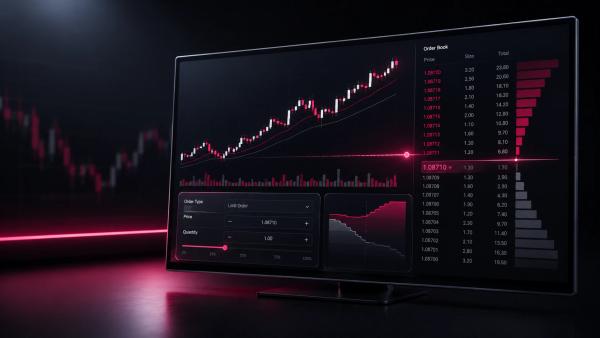
Market depth shows the volume of buy and sell orders available at different price levels around the current market price. Displayed through order books or Depth of Market (DOM) ladders, it can help traders assess available liquidity and understand how order size may affect execution and slippage.
Understanding market depth can also help you see how a larger order might move the average execution price, assess short-term liquidity conditions, and estimate potential slippage before placing a trade. This guide explains how depth of market works, how to read an order book ladder, and how it can affect execution in CFD trading.
Quick Takeaways
- Market depth shows pending orders at different price levels rather than trades that have already been executed.
- Deeper liquidity can allow larger orders to be filled with less price impact, while thinner liquidity can increase the risk of slippage.
- The bid and ask sides of an order book show the liquidity available to buyers and sellers at different prices.
- In over-the-counter (OTC) CFD trading, the depth shown to a trader depends on the provider's execution model and liquidity arrangements.
What Is Market Depth?
So, what is market depth? Also known as Depth of Market (DOM), it shows how much buying and selling interest is available at different price levels. It can indicate how easily the market may absorb an order without a significant change in the execution price.
But what does market depth mean in practice? A market depth display typically shows multiple bid and ask levels rather than only the best bid and ask available at the top of the book. Depending on the market and trading platform, this information may be provided through Level 2 data.

The order book has two sides:
- Ask side: Shows sell orders available at specified prices.
- Bid side: Shows buy orders available at specified prices.
Market depth should not be confused with trading volume. Trading volume measures transactions that have already taken place, while market depth shows orders currently available in the order book. These orders are not guaranteed to remain there because they may be modified, cancelled or executed.
How Market Depth Affects Execution and Slippage
When a trader submits a market order to an order-driven market, it normally matches against the best available orders first. If there is not enough liquidity at the best price to fill the entire order, the remaining amount may be filled at the next available price levels.
This process can result in slippage, where the average execution price differs from the price available when the order was submitted.
Consider a simplified EUR/USD example in which a trader submits a market order to buy 10 lots:

The best ask at 1.2501 has only three lots available, so the order needs liquidity from three price levels to complete the 10-lot fill.
The volume-weighted average execution price is:
[(3 × 1.2501) + (4 × 1.2502) + (3 × 1.2503)] ÷ 10 = 1.2502
The difference between the initial best ask of 1.2501 and the average execution price of 1.2502 illustrates the effect of slippage in this example.
A deeper order book has more liquidity available across its price levels, which may allow larger orders to be filled with less price impact. In a thinner market, an order may need to move through more price levels before it is fully executed, potentially increasing slippage.
Market Depth in CFD Trading vs Centralised Exchanges
So, what is market depth like in a CFD account versus a centralised exchange? It doesn't work in exactly the same way across every market or trading platform.
On a centralised exchange, such as a futures exchange, the order book contains orders submitted to that trading venue. Participants accessing the same order book can therefore view the liquidity available on that venue, although some order types may conceal part of their total size.
CFDs, by contrast, are generally traded over the counter rather than through a single centralised exchange. The market depth shown by a CFD provider therefore depends on its execution model and the sources of liquidity available through that provider.
Some providers may aggregate prices or liquidity from several external counterparties, while others may act as the counterparty to the client's trade. As a result, a CFD depth display should not automatically be treated as a complete representation of all liquidity available in the underlying market.
Where a provider offers a form of direct market access (DMA), the execution process may give the trader greater visibility of prices or orders in the relevant underlying market. However, the exact arrangement depends on the provider, product and trading venue.
UK-authorised CFD providers are subject to FCA conduct requirements, including rules relating to clients' best interests and order execution. These requirements do not mean that every order will receive the same execution outcome, as factors such as price, liquidity, order size, market conditions and execution arrangements can affect the final fill.
Traders should also remember that displayed liquidity can change quickly. Orders may be modified, executed or cancelled before another order reaches the market, so the depth visible on a trading platform is only a snapshot of liquidity at that moment.
Risks and Common Pitfalls When Reading Market Depth
Market depth can provide useful information about current liquidity, but it does not show the complete intentions of every market participant.
For example, a large visible order does not necessarily mean that the full amount will remain available when another trader attempts to trade against it. Orders can be cancelled before execution, while some legitimate order types, such as iceberg orders, display only part of their total quantity.
Spoofing is a separate issue. It involves placing orders with the intention of cancelling them before execution in order to create a misleading impression of supply or demand. Traders should therefore avoid assuming that every large order shown on a depth ladder represents firm or lasting trading interest.
Common mistakes include:
- Treating displayed depth as guaranteed liquidity: Orders shown in an order book may be modified, cancelled or filled before your order reaches them.
- Ignoring hidden liquidity: Some order types display only part of their total size, so visible market depth may not show all available liquidity.
- Relying on depth during volatile periods: Liquidity can change rapidly around major economic announcements or other market-moving events. This can contribute to wider spreads and greater slippage.
- Using market depth as a standalone signal: An order book provides a snapshot of current liquidity, but it does not reliably predict the market's next price movement.
What Market Depth Means for Your Trading Execution
Now that market depth is explained, you can see how much liquidity is available at different price levels and how order size may affect execution. Deeper liquidity may reduce market impact, while thinner liquidity can increase the likelihood of an order being filled across several prices.
However, market depth changes continuously. The liquidity shown when an order is submitted may not still be available when that order reaches the market. Understanding market depth should therefore form part of a broader understanding of execution, liquidity and order types, rather than being treated as a standalone trading signal.
Conclusion
So, what is market depth in practice? It gives traders a view of available liquidity across different price levels. It can help explain why larger orders may experience slippage and why execution conditions can change quickly when liquidity becomes thin.
However, displayed depth is only a snapshot and may not represent all available liquidity or predict where prices will move next. In CFD trading, the information shown also depends on the provider's execution model and liquidity arrangements. Market depth is therefore most useful as an execution and liquidity tool rather than a standalone trading signal.
CFDs are complex, leveraged products and carry a high risk of losing money rapidly. FCA rules require CFD providers to display the percentage of their own retail investor accounts that lose money, so the relevant loss percentage can vary between providers. Traders should consider whether they understand how CFDs work and whether they can afford the risks involved.
FAQ
What Is Market Depth in Trading?
The market depth meaning is straightforward: it's the volume of buy and sell orders available at different price levels around the current market price. It helps traders assess available liquidity and understand how easily the market may absorb an order without significantly affecting the execution price.
What Is the Difference Between Market Depth and Level 2 Data?
Market depth describes the liquidity available at different price levels in an order book. Level 2 data is a type of market data that can provide visibility beyond the best bid and ask, showing multiple price levels and the order sizes available at those levels. The exact information displayed depends on the market, venue and data provider.
How Do You Read a Market Depth Ladder or DOM?
A Depth of Market (DOM) ladder typically shows ask prices on one side and bid prices on the other, together with the volume available at each level. Traders can use this information to see where liquidity is concentrated and assess current buying and selling interest.
Does Market Depth Show Historical Executed Trades?
No. Market depth primarily shows orders currently available in the order book rather than a history of completed transactions. Executed trades may be displayed separately through trading volume or time and sales data, depending on the market and trading platform.
How Does Market Depth Work in CFD Trading Compared With Centralised Exchanges?
On a centralised exchange, market depth reflects orders available on the relevant trading venue. CFDs are generally traded over the counter, so the depth shown by a CFD provider depends on its execution model and liquidity arrangements. Some providers may aggregate prices or liquidity from external counterparties, while others may act as the counterparty to the client's trade.