What Is Level 2 Data? Depth of Market Explained
In this article
- Level 1 vs Level 2 Market Data: What Is the Difference?
- How to Read a Level 2 Order Book
- Centralised Exchange Order Books vs CFD Liquidity Pools
- Realities and Risks of Trading with Level 2 Data
- Understanding Market Microstructure to Improve Execution
- Conclusion
- Frequently Asked Questions
- Browse All Education

Level 2 data, often associated with Depth of Market (DOM), shows pending buy and sell orders across multiple price levels beyond the best bid and ask. It helps traders assess order book depth and available liquidity, although the information displayed depends on the market, trading venue and data feed.
Level 2 data provides a deeper view of market liquidity by showing buy and sell orders at multiple price levels beyond the best available bid and ask. It can help traders see where orders are concentrated and assess the liquidity available at different prices.
However, the answer to what is Level 2 data depends on the market, trading venue and data feed you're using. Exchange-traded market depth, for example, is not necessarily equivalent to the liquidity displayed by an over-the-counter (OTC) CFD or Forex provider.
This guide explains what is Level 2 data, how to read an order book and how exchange order books differ from CFD liquidity pools.
Quick Takeaways
- Level 2 data, often associated with Depth of Market (DOM), shows pending buy and sell orders across multiple price levels beyond the best bid and ask.
- Bids represent orders to buy, while asks or offers represent orders to sell.
- In exchange-traded markets, Level 2 data reflects orders available through the relevant exchange, venue or data feed. In OTC CFD and Forex trading, displayed depth may instead reflect liquidity available through a broker or its execution arrangements.
- Displayed liquidity does not guarantee execution at a particular price. Orders can be changed or cancelled, some liquidity may be hidden, and available depth can fall quickly during volatile markets.
Level 1 vs Level 2 Market Data: What Is the Difference?
Level 1 and Level 2 market data differ mainly in how much information they provide about available prices and liquidity — which is central to the Level 2 data meaning traders rely on.
Level 1 data generally shows top-of-book information, including the best available bid and ask prices and their quoted sizes. Depending on the market and data feed, it may also include information such as the last traded price and trading volume.
This is enough to see the prices currently available at the top of the book, but it does not provide the same view of orders waiting at additional price levels.
Level 2 data provides greater order book depth. It can show multiple bid and ask levels together with the quantity available at each price. Exactly what information is included depends on the exchange, venue and market data product. Some equity market data feeds may also identify market participants or quoting venues.
Feature | Level 1 Data | Level 2 Data / Depth of Market |
|---|---|---|
Displayed Price Levels | Best bid and ask | Multiple bid and ask levels |
Size Visibility | Quoted size at the best prices | Available size across multiple price levels |
Participant Information | Usually limited | May be available on some equity market data feeds |
Primary Use | Monitoring current prices and basic execution | Assessing market depth, liquidity and order flow |
Access | Often included with basic market data | May require an additional market data subscription |
How to Read a Level 2 Order Book
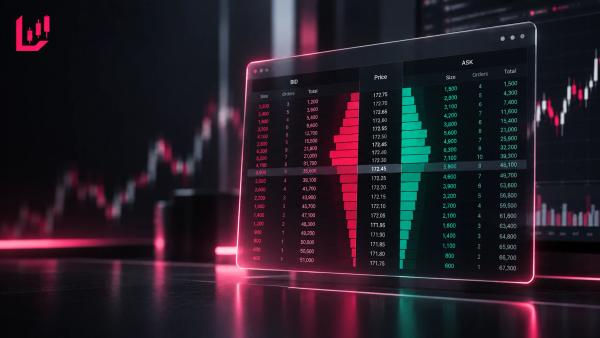
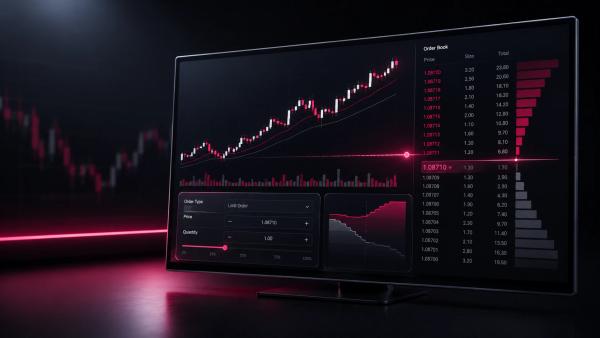
Knowing what is Level 2 data helps when reading a DOM window, which normally presents bids and asks on opposite sides of the order book.
The bid side contains orders from buyers willing to buy at specified prices. These orders are generally ranked from the highest bid downwards. The best bid is the highest displayed price currently available from a buyer.
The ask side contains orders from sellers willing to sell at specified prices. These orders are generally ranked from the lowest ask upwards. The best ask is the lowest displayed price currently available from a seller.

Looking at the size available across these levels can help you assess short-term liquidity and see where orders are concentrated:
- Bid depth: A large concentration of buy orders may indicate an area where buying interest is relatively strong — for example, if the best bid sits at 1.1050 with further orders stacked at 1.1049, 1.1048 and 1.1047. However, displayed bids should not automatically be treated as support because orders can be modified or cancelled. You can also look at how buy limit orders are positioned at lower price levels.
- Ask depth: A large concentration of sell orders may indicate an area of greater available supply. Price would need sufficient buying activity to trade through that displayed liquidity, assuming the orders remain available.
- Time and Sales: Often called the tape, this shows transactions that have actually taken place. Comparing executed trades with orders displayed in the DOM can help traders distinguish completed trading activity from liquidity that is simply resting in the order book.
Centralised Exchange Order Books vs CFD Liquidity Pools
Level 2 data does not represent the same thing across every market or execution model.
Exchange-traded markets use order books operated by particular trading venues. For example, CME Globex operates central limit order books for its listed markets. Equity trading can be more fragmented, with the same security potentially trading across multiple venues.
As a result, market depth depends on the exchange, venue and data feed being viewed. It should not automatically be interpreted as every order available worldwide.
Trading venues and investment firms operating in regulated markets are also subject to applicable transparency and conduct requirements. In the UK, these markets fall within a regulatory framework overseen by bodies including the Financial Conduct Authority (FCA).
OTC markets work differently.
Spot Forex does not have a single central order book covering the entire global market. CFD trading is also broker-dependent because a Contract for Difference (CFD) is an OTC derivative that allows traders to speculate on price movements without owning the underlying asset.
Depending on the broker's execution model, prices and available liquidity may come from external liquidity providers, internal liquidity or a combination of sources. Electronic Communication Network (ECN) or Straight-Through Processing (STP) arrangements may aggregate quotes or liquidity from banks, non-bank market makers and other counterparties.
What Does CFD Depth of Market Actually Show?
On a CFD platform, Depth of Market should not be assumed to represent total global trading volume or liquidity.
Instead, the information displayed depends on the provider's pricing and execution arrangements. This may include liquidity from external providers, internally available liquidity or a combination of sources.
The exact information therefore varies between brokers and platforms. Traders should check the provider's execution policy and platform documentation to understand what its DOM represents.
If an order is larger than the quantity available at the best quoted price, it may need to be executed across several price levels. Depending on market conditions and the provider's execution model, the average execution price may therefore differ from the first price displayed.
Realities and Risks of Trading with Level 2 Data
Understanding what is Level 2 data also means understanding its limits: Depth of Market can provide useful information about available liquidity, but displayed orders should not be treated as guaranteed support or resistance.
- Cancelled Orders and Spoofing: Orders displayed in the book can be modified or cancelled before execution. Spoofing involves placing orders without a genuine intention to execute them in order to create a misleading impression of supply or demand. It is a form of prohibited market manipulation in regulated markets.
- Iceberg and Hidden Orders: Some trading venues support order types that display only part of the total quantity. This means the visible size at a particular price may not represent all liquidity associated with an order.
- Execution Slippage: Level 2 shows displayed or resting liquidity rather than guaranteeing future execution. During volatile periods, orders may be cancelled and available liquidity can fall quickly. A market order may therefore execute at a different price from the one initially displayed.
- Cost of Level 2 Access: Part of what does Level 2 data mean in practice is cost: real-time market depth from exchanges may require a separate market data subscription, although fees and access arrangements vary by exchange, broker and user type. CFD providers also differ in whether DOM is available and which account types or platforms support it.
Understanding Market Microstructure to Improve Execution
Depth of Market can help traders understand how different order types interact with available liquidity.
Limit orders can add resting liquidity to an order book, while marketable orders consume liquidity already available at quoted prices. Watching liquidity appear, change and disappear can therefore provide useful information about how orders interact within a market.
Market depth can also help traders think more carefully about order size and execution. A relatively large order placed into a thin market may need to trade across several available price levels rather than being filled entirely at the best displayed price.
Understanding how different order types interact with market depth can also help when choosing between seeking immediate execution and placing a limit order at a specified price.
However, Level 2 data is not a standalone forecasting tool. Displayed liquidity can change rapidly and does not guarantee where the market will move or where an order will ultimately be filled.
CFDs are complex, leveraged products and carry a high risk of losing money rapidly. FCA rules require CFD providers to display an up-to-date, firm-specific percentage showing how many retail client accounts lose money when trading CFDs with that provider.
Conclusion
In summary, what is Level 2 data comes down to this: it provides a deeper view of market liquidity by showing bid and ask orders across multiple price levels. It can help traders assess where liquidity is concentrated and understand how different orders interact within the market.
However, the information displayed depends on the trading venue, data feed and execution model. Exchange order books and CFD Depth of Market do not necessarily represent the same liquidity, while displayed orders can change or disappear before execution.
With Level 2 data explained, it's clear this information is best used as part of a broader approach to execution and risk management rather than as a standalone indicator of future price movements.
FAQ
What Is the Main Difference Between Level 1 and Level 2 Market Data?
In short, what is Level 2 data comes down to depth: Level 1 data generally shows top-of-book information, including the best bid and ask prices and their quoted sizes. Level 2 data goes deeper by showing orders and available size across multiple price levels. The exact information included depends on the market, trading venue and data feed.
Is Level 2 Data Necessary for Retail Trading?
No. Level 2 data is not essential for every retail trader. Those trading over longer timeframes may have less need for detailed order book information. It can be more useful for active traders who want to monitor short-term liquidity, order concentration and how available depth changes around the current market price. However, Level 2 data does not predict future price movements or guarantee execution.
How Does Depth of Market Work in CFD Trading Compared With Stock Exchanges?
Exchange-traded market depth reflects orders available through the relevant exchange, trading venue or market data feed. It should not automatically be treated as a single global order book, particularly where trading is spread across multiple venues. CFD trading is OTC, so Depth of Market works differently. The liquidity displayed depends on the provider's pricing and execution arrangements and may include external liquidity providers, internal liquidity or a combination of sources. Traders should check their provider's execution policy to understand what its DOM represents.
Can Level 2 Order Book Data Be Misleading?
Yes. Displayed order book liquidity can give an incomplete or misleading picture of actual supply and demand. Orders can be changed or cancelled before execution, while iceberg or hidden orders can prevent the full order quantity from appearing in the visible book. Spoofing can also create a false impression of buying or selling interest by placing orders without a genuine intention to execute them. For these reasons, displayed Level 2 liquidity should not be treated as guaranteed support or resistance.
Does Viewing Level 2 Data Require an Extra Subscription Fee?
It depends on the market and provider. Real-time exchange market depth may require an additional data subscription, with fees varying by exchange, broker and user type. For CFD and Forex trading, DOM availability and pricing vary between providers, account types and trading platforms. Traders should check their provider's market data fees and platform specifications rather than assuming Level 2 access is included.