What Is a Stop Order in Trading?
In this article

A stop order is a conditional execution instruction that remains dormant on a broker's server until a designated price level—the stop price—is touched or crossed. The moment this trigger threshold is satisfied, the instruction instantly converts into an unconditional market order, which is routed to the liquidity pool for immediate execution at the next available market price. Consequently, standard stop orders guarantee that the order will activate, but they do not guarantee the final fill price.
A stop order is a conditional instruction that activates when the market reaches a specified price, known as the stop price. Until that level is touched or passed, the order remains inactive on the broker’s system.
Traders can use stop orders to enter a position after the market confirms a particular direction or to exit a position when the price moves against them.
For retail Contract for Difference (CFD) traders, it is important to understand how a stop order changes from an inactive instruction into an active market order — which is really what is a stop order at its core: a conditional trigger, not an immediate transaction. CFDs use leverage, which can increase both potential profits and losses. Any difference between the stop price and the final execution price may therefore increase trading costs or losses.
Quick Takeaways
- A stop order remains inactive until the market reaches or passes the stop price.
- Once triggered, it becomes a standard market order.
- A standard stop order triggers execution but does not guarantee the final price.
- This means traders may experience slippage.
- Stop orders can be used to limit losses or enter trades when the price breaks through a key level.
How Does a Stop Order Work?
A stop order works in two stages. First, it remains inactive as a conditional instruction. Once the market reaches the stop price, it becomes an active market order.
When you place a stop order, you are not instructing the broker to buy or sell immediately. Instead, you are setting a price level that will trigger the instruction.
The order moves through two main phases:
The Resting Phase
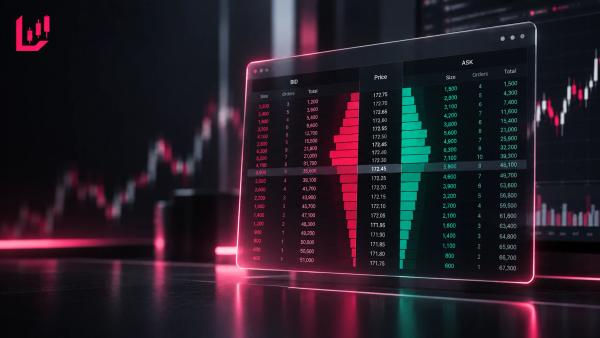
The order remains on the broker’s system as a conditional instruction. It does not interact with available market liquidity and does not appear in the visible market depth.
Other market participants cannot usually see the order while it remains inactive.
The Active Routing Phase
When the market touches or moves beyond the stop price, the condition is met. The broker then converts the stop order into a standard market order and sends it for execution at the best available price.
This distinction is important because the stop price is only a trigger. It is not necessarily the price at which the order will be filled.
During fast-moving or volatile markets, the next available price may be higher or lower than the stop price. This difference is known as slippage.
Buy Stop Orders vs Sell Stop Orders
The position of a stop order in relation to the current market price determines whether it is a buy stop or a sell stop.
Both order types can be used to enter a trade after the market moves through a key price level or to help manage the risk of an existing position.
Buy Stop Orders
A buy stop order is placed above the current market price. It remains inactive until the market reaches or moves above the specified stop price.
- Entering a trade: Traders often use a buy stop to enter a long position after the price breaks above a key resistance level. For example, if an asset is trading at £100 and has repeatedly struggled to move above £105, a trader might place a buy stop at £106. The order will only activate if the market breaks through the resistance level, suggesting that upward momentum is continuing.
- Managing risk: A buy stop can also be used to close a short position. If the market rises against the trade, the order is triggered and becomes a market order to buy back the asset. This can help limit losses, although the final execution price is not guaranteed.
Sell Stop Orders
A sell stop order is placed below the current market price. It remains inactive until the market falls to or below the specified stop price.
- Entering a trade: Traders may use a sell stop to open a short position after the price breaks below a key support level. If the market falls through an important support area, the order is triggered automatically, allowing the trader to enter the trade as downward momentum develops.
- Managing risk: A sell stop also forms the basis of a traditional what is a stop loss order. If you hold a long position, placing a sell stop below your entry price means the order will activate if the market falls to that level. This can help limit further losses by closing the position automatically, although the execution price may differ from the stop price during fast-moving markets.
Stop Orders vs Limit Orders: What's the Difference?
The key difference between a stop order and a limit order is what each one is designed to prioritise.
A stop order is intended to increase the likelihood that your trade will be executed once the stop price is reached. A limit order is designed to ensure that your trade is only executed at your chosen price or a better one.
Understanding this distinction is important when choosing between different order types in trading.
Feature | Stop Order | Limit Order |
|---|---|---|
Primary purpose | Trigger a trade once a specified price is reached | Execute a trade only at a specified price or better |
Execution | High likelihood of execution once triggered, but not guaranteed in all market conditions | Only executes if the market reaches the limit price |
Price certainty | No guarantee of the final execution price | Guarantees the specified price or a better one if the order is filled |
Typical placement | Buy stop above the current price; sell stop below the current price | Buy limit below the current price; sell limit above the current price |
The choice depends on your trading objective. If your priority is to close a losing position as quickly as possible, a stop order is generally the more suitable option because it focuses on execution rather than price. However, the final execution price may differ from the stop price if the market moves quickly.
If your priority is to buy or sell only at a specific price, a limit order is usually the better choice. The trade will only be executed if the market reaches your chosen price, but there is a possibility that the order will not be filled at all.
The Real Cost of Stop Orders: Gaps and Slippage
The main cost of using a stop order is not usually a platform fee. Instead, it comes from slippage, which occurs when the market moves so quickly that your order is executed at a different price from your stop price.
Once a stop order is triggered, it becomes a market order and is executed at the best available price. If there is not enough liquidity at your stop price, or the market jumps past it without trading at that level, your order may be filled at a less favourable price.
This is most common during periods of high volatility, major economic announcements and weekend market gaps.
For example:
- You hold a long position with a sell stop at £50.00.
- The market closes on Friday at £52.00.
- Over the weekend, unexpected economic news causes prices to fall sharply.
- When the market reopens on Monday, the first available price is £47.50.
Because the market moved straight from £52.00 to £47.50, your stop order could not be filled at £50.00. Instead, it was triggered when the market opened and executed at the next available price of £47.50, resulting in a larger loss than you had planned.
Liquidity can disappear quickly during major economic announcements, which is why stop orders placed around these events are more likely to be filled well away from their intended price.
The greater the gap between your stop price and the next available market price, the greater the potential slippage.
Using Stop Orders in CFD Trading
Stop orders play an important role in risk management when trading Contracts for Difference (CFDs). Because CFDs are leveraged products, even relatively small market movements can have a much larger effect on your trading account.
For example, if you trade with 1:10 leverage, a 1% move against your position results in a 10% loss on the margin you have committed. If your stop order is also affected by slippage, those losses may increase further.
Although stop orders can help manage risk, they cannot remove it completely. Traders should also consider market conditions when deciding where to place their stops.
Some common practices include:
- Avoiding tight stop orders immediately before major economic announcements.
- Allowing for wider spreads during quieter trading sessions.
- Placing stop orders at logical technical levels rather than at obvious round numbers where market volatility may be higher.
Conclusion
A stop order is a conditional instruction that activates when the market reaches a specified price, known as the stop price — this is the essence of what is a stop order in everyday trading terms. Until that level is touched or passed, the order remains inactive on the broker's system.
However, it is important to understand its limitations. A standard stop order is designed to trigger a trade when the stop price is reached, but it does not guarantee the final execution price. During volatile markets or periods of low liquidity, the trade may be executed at a different price because of slippage.
If you want to compare how different providers handle order execution, pricing and liquidity, our CFD broker reviews offer independent analysis of trading costs and execution quality.
FAQ
What is the main difference between a stop order and a limit order?
The key distinction lies in what each order type guarantees. A stop order guarantees execution activation but provides no price control, converting into a market order the moment its trigger price is touched. A limit order guarantees a specific execution price or better, but offers no guarantee of a fill if the market moves away from your specified price ceiling or floor.
Does a standard stop order guarantee your execution price?
No, a standard stop order does not guarantee your execution price. It only guarantees that the order will activate once the trigger price is hit. Because it converts into a market order upon activation, the final fill price depends entirely on available liquidity and can be worse than your trigger price due to market gaps or execution slippage.
What happens to a resting stop order overnight or over the weekend?
Unless configured with a specific expiration time, a standard stop order remains active on the broker's server. If the market closes on Friday and opens at a significantly lower or higher price on Monday morning (gapping past your trigger), your stop order will activate instantly at the opening bell and fill at the next available market price, which may be far worse than your intended stop level.
Why would a trader use a buy stop order instead of a limit order?
A trader uses a buy stop order when they want to execute an offensive breakout strategy. By placing the trigger above the current market price, they ensure they only buy into a position once the market demonstrates strong upward momentum. A buy limit order, by contrast, is placed below the market to catch an asset at a discount.
Can a stop order experience slippage during low-liquidity environments?
Yes, low-liquidity environments are prime catalysts for execution slippage. When major macroeconomic news drops or when trading occurs during thin off-market hours, liquidity depth evaporates. When your stop triggers and turns into a market order, the lack of available volume forces the execution engine to fill your order across wider bid-ask spreads, resulting in a worse final execution price.